04/09/2026
It’s not just getting drier or wetter – seasons are becoming less predictable
After another exceptionally dry year, BSPB technical manager Louise Everest provides an update on trial sites and next season’s drilling plans – and explores what the future may hold for varietal selection.
Increasing variability
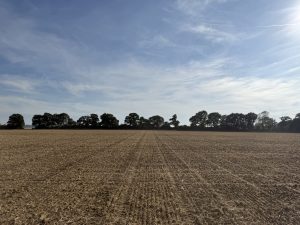
“The biggest change we’re seeing isn’t simply that seasons are getting wetter or drier – it’s that they’re becoming much less predictable,” says BSPB technical manager Louise Everest.
Measuring drought and waterlogging weather extremes in trials is subjective and open to interpretation and very hard to measure across different soil types. However, researchers such as University of Warwick and the James Hutton Institute are working to develop climate resilient crop.
Wetter autumns can make establishment difficult, while dry springs, extreme heat and sudden heavy rainfall can put crops under very different pressures later in the season.
“We’re also seeing much bigger differences between trial sites,” she says.
“One site can be under severe drought stress while another receives timely rainfall, so varieties are being tested across an increasingly wide range of conditions.
“That makes resilience and consistency much more important.”
The changing seasons are also compressing the working year. Crops can move through growth stages more quickly, harvests are starting earlier and suitable fieldwork windows are narrowing.
“There can be long periods when conditions make fieldwork impossible, causing trial operators to miss spray timings, followed by a very short window when everything needs to happen at once, such as this years’ harvest season” says Louise.
“That affects everything from trial inspections and disease assessments to harvest logistics while ensuring the trials are within protocol.”
These changes are putting greater emphasis on varieties that can deliver stable performance across environments, rather than simply achieving the highest yield in ideal conditions.
The future of varietal selection
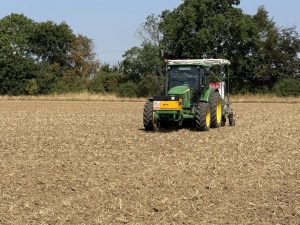
“The focus is shifting towards varieties that can establish quickly, cope with variable conditions and keep performing when the weather turns against them,” says Louise.
“Strong establishment and early vigour will be increasingly important, alongside flexible drilling windows, nitrogen, phosphorous and water use efficiency, disease resistance and tolerance to heat and drought.
“Farmers need varieties that can make the most of limited moisture and deliver consistently across difficult seasons.”
Louise predicts that consistency could become more valuable than headline yield alone.
“A variety yielding 102% reliably every year may ultimately be more useful than one that reaches 108% in a good season but falls away under drought or stress.
“This year we’ve seen waterlogging followed by extreme drought, and the varieties coming through both are exactly the kind of resilient varieties farmers will need in future.”
Members are encouraged to share any unusual trial trends or observations with BSPB so they can be fed back to other trial operators.
Contact: lousie.everest@bspb.co.uk
Trials update
Cereals:
- All cereals and oilseeds were harvested very early this season with more variable data influenced by the challenging weather conditions.
- The new 2027 season has started.
- Winter Oilseed rape trials are due to be drilled once there is sufficient moisture in the ground to achieve good uniform establishment.
- Winter triticale, rye and barley applications are in, with winter wheat and oats to follow by the end of August.
Sugar beet:
- All remaining trials were looking good despite the hot, dry conditions and BSPB is expecting to obtain good data from all three sites.
- One trial is showing suspected virus yellows, but symptoms remain at low level.
Maize
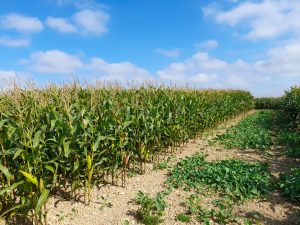 Trials are progressing towards harvest, with fortnightly monitoring continuing.
- Several trials have been abandoned due to poor establishment, weed pressure and erratic early germination. More recently, there have been a couple at pre-harvest inspections finding insufficient viable plots to produce reliable data and these will not be harvested.
- Continued hot, dry weather has brought harvest forward again, with the BSPB Maize Tour taking place on 9–10 September but now without field visits and the crop group meeting only.
View all news