02/11/2026
BSPB’s 60th AGM: Celebrating 60 Years of Representing Plant Breeding
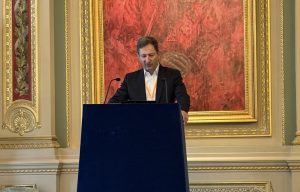 “When we talk about plant breeding, it’s easy to focus on varieties, traits and technology, which are all important. But at the heart of it, it’s all about the people who have committed to this industry over the last 60 years,” said BSPB chairman Jonathan Tann, as he opened this year’s AGM.
Hosted at the historic Drapers’ Hall in London this October, our AGM welcomed a range of speakers reflecting on six decades of progress in plant breeding – and what the sector needs to do to rise to the challenges ahead.
While farmers face increasingly challenging conditions, this progress has helped improve food security and ensure farm businesses are profitable and competitive,” Mr Tann said. “Much of that success can be tracked back to the innovation and investment made by plant breeders every year.”
A year of opportunity
Reflecting on the past year, he said it has been a year of change, but also of opportunity for BSPB.
“We’ve maintained effective royalty collection, improved communications with members, increased our visibility through social media and events, and started rebuilding and strengthening a number of important stakeholder relationships.”
Mr Tann also announced the appointment of Helen Fasham as CEO in October, who is a former joint head of Defra’s Plant Varieties and Seeds team, and brings extensive experience of agricultural policy, regulation and stakeholder engagement.
Meanwhile, Helen Wilson of RAGT, Mark Buckingham of Bayer and Roger Keeling from Elsoms, have joined as full members of the board of directors.
The future of BSPB
 Looking ahead to the next six months, the Board is set to undertake a strategic review, and welcomes input from all members, stakeholders and anyone interested in plant breeding to help shape the organisation and future priorities.
“This important work is about building an organisation that is strong, focused, and ready for the future,” Mr Tann said.
The declining use of certified seed was named as a key area of concern for BSPB and the wider industry, given its importance in supporting continued investment in plant breeding, and Mr Tann said BSPB is working constructively with the industry to address this.
“BSPB also acts as a voice for the plant breeding sector, working with the government on a number of important policy issues such as precision breeding and Sanitary and Phytosanitary (SPS) agreement.
“These issues matter because they affect how quickly we can bring innovation to UK farmers, and we want to be more and more engaged to support breeding and agriculture as a whole,” he said.
Mr Tann concluded: “The challenges ahead are significant, but if the last 60 years have taught us anything, it’s that this industry has a great capacity and ability to innovate and develop and deliver.
“At BSPB, we will focus on supporting the industry to continue that successful development and delivering strategies that make a difference for plant breeding in the UK”.
Saving the world’s largest seed bank
The AGM also celebrated the contribution of generations of plant breeders and scientists to our farming sector and food security today.
Simon Parkin, author of The Forbidden Garden of Leningrad, shared the story of Soviet botanists who protected what was then the world’s largest seed collection during the 872-day siege of Leningrad in World War II.
Despite famine, bombings and vermin, staff refused to consume the specimens, and the collection was protected almost down to the last seed. Their sacrifice protected genetics that remain important for modern agriculture.
Plant breeding innovation
Professor Cristóbal Uauy, director at the John Innes Centre, talked about the work being done to utilise this genetic diversity going forward.
In the 1930s, botanist Arthur Watkins collected wheat varieties from around the world, creating a valuable source of genetic diversity that is still used by plant breeders today.
Researchers at the John Innes Centre have found that modern wheat breeding has only used around 40% of the genetic variation in this collection. They are now looking at how the remaining genetic diversity could be used to develop improved wheat varieties for the future.
Meanwhile, a recent grass pea trial with Traditional Norfolk Poultry and other partners looked at replacing imported soya in feed.
“Initially, we were able to replace 20% of the soya, but we’ve now shown that we can replace 100% of it with grass pea, while achieving equivalent weight gains and growth rates,” Professor Uauy said.
Another project is exploring the potential of high-fibre wheat to produce white bread with an improved nutritional profile.
However, he emphasised that collaboration with millers, food producers and other organisations across the supply chain will be essential to retain this added value and create market demand.
While genetics have a huge role to play in delivering food security, health and resilience over the next 25 years, Prof Uauy said partnerships and collaboration are essential to ensure these advances reach farmers and consumers – rather than remaining in the lab.

View all news